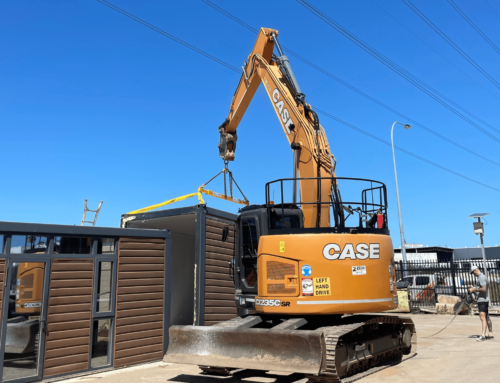
Electric excavators are starting to show up on more Australian jobsites, but we still get plenty of questions about where they actually make sense.
How long will they run? How do you charge them? Can they keep up with diesel? And are they genuinely useful on site, or is electric machinery still a bit of a novelty?
If you’re considering electric excavator hire, here’s what you need to know.
For a broader look at where electric equipment is heading, have a read of our guide to the future of electric excavator hire.
Electric Excavator FAQs
What is an electric excavator?
Pretty much what it sounds like. Instead of a diesel engine, an electric excavator uses a battery-powered electric motor to run the machine and its hydraulic systems.
From an operator’s point of view, the fundamentals are much the same. You’ve still got the tracks, boom, arm and bucket you’d expect from an excavator. The big difference is that you’re plugging it in instead of filling it with diesel.
How long does an electric excavator run on a single charge?
As a general guide, most electric mini excavators currently offer around 4-8 hours of runtime on a charge.
Exactly how long you’ll get depends on the machine and what you’re asking it to do. Trenching, landscaping and stop-start work won’t draw power at the same rate as continuous heavy digging.
How long does charging take?
Charging from a standard power supply can take around 8–12 hours, which generally makes overnight charging the obvious option. With a suitable higher-powered connection, that can come down to roughly 4–6 hours.
Some machines also support fast charging, potentially getting a useful amount of charge back into the battery in 1–2 hours.
The main thing is to sort out your charging plan before the excavator arrives. If you’ve got reliable power on site and somewhere to plug in overnight, it’s usually pretty straightforward.
Are electric excavators as powerful as diesel excavators?
In the mini and compact classes, electric excavators can hold their own against comparable diesel machines.
Electric motors deliver torque straight away, so operation can feel responsive and controlled. For the sort of trenching, landscaping, indoor and general excavation work these machines are typically used for, going electric doesn’t necessarily mean giving up useful performance.
At the larger end of the excavator market, diesel still has a much wider range of options, although electric machines are continuing to develop.
Are electric excavators cheaper to run than diesel?
They certainly can be.
You’re not buying diesel, and an electric powertrain eliminates many of the service items that come with a diesel engine. There’s no engine oil or fuel filters to worry about.
How much you actually save will depend on electricity prices, utilisation and the machine you’re comparing it with. But lower running and maintenance requirements are definitely part of the appeal.
Do electric excavators produce emissions?
There’s no exhaust coming out of the machine while it’s operating.
That’s a big deal when you’re working indoors or somewhere with limited ventilation. You’re not trying to manage diesel exhaust fumes in a basement, warehouse or enclosed work area.
It’s more accurate to call them zero-emission at the point of use, as the overall environmental impact still depends on things like where the electricity comes from.
Are electric excavators quieter than diesel excavators?
Yes, and this is one of those differences you notice pretty quickly on site.
Take away the diesel engine and you take away a major source of machine noise. You’ll obviously still hear the hydraulics, tracks, attachments and the work itself, but overall noise levels can be considerably lower.
That can make electric equipment a good fit around homes, schools, hospitals and other places where keeping noise down matters.
It’s also handy when you’ve got early starts, late finishes or site-specific noise restrictions to work around.
Can electric excavators be used on remote sites?
They can, but this is where you need to think about the practicalities.
If there’s no reliable power on site, keeping the machine charged becomes another thing you’ve got to manage. Depending on the project, temporary power or another charging solution may be possible, but it won’t suit every remote job.
If you’re heading somewhere without easy access to power and you’re planning to dig hard all day, diesel may still be the simpler option.
Where Do Electric Excavators Make the Most Sense?
There’s no point putting an electric excavator on a job just because it’s electric. The real question is whether its advantages solve a problem you’ve actually got on site.
Here are a few situations where they can really earn their keep.
Indoor and confined spaces. Basements, warehouses, tunnels and enclosed work areas are an obvious fit. No diesel exhaust at the machine means one less issue to manage when ventilation is limited.
Noise-sensitive sites. Working around hospitals, schools, aged care facilities or residential areas? A quieter machine can make life a lot easier, particularly when you’re working early, late or on weekends.
Inner-city projects. Tight access, neighbours close by and restrictions around noise or emissions can all make electric equipment worth considering on urban jobs.
Utility and trenching work. Compact electric excavators are well suited to jobs such as drainage, plumbing and electrical trenching where manoeuvrability and precise control matter.
Occupied buildings. Renovation, fit-out and partial demolition work gets complicated when people are still using the building. Cutting down machine noise and removing exhaust fumes can make an electric excavator a much better neighbour.
Sensitive environments. Parks, zoos and similar locations can benefit from machinery that creates less noise and doesn’t produce exhaust emissions where it’s working.
Talk to ZELVi Equipment
Got a job where electric might make sense?
Get in touch with the ZELVi team and tell us what you’re working on. We’ll help you work out whether an electric excavator suits the job, and if it doesn’t, we’ll point you towards something that does.